 English
 简体中文
简体中文
Views: 0 Author: Site Editor Publish Time: 2026-09-24 Origin: Site


Scaling modern water infrastructure presents a stubborn physical challenge. Increasing vertical reach or boosting filtration density requires exponential pressure generation. However, mechanical room real estate remains severely finite. You cannot simply keep expanding pump rooms to accommodate larger equipment footprints. A vertical multistage pump brilliantly solves this spatial dilemma. Manufacturers construct them by stacking multiple impellers sequentially on a single vertical shaft. This configuration compounds discharge pressure exponentially while maintaining an exceptionally compact footprint. We designed this guide as a technical and commercial evaluation resource for engineering professionals. You will discover practical methods for selecting, sizing, and implementing these advanced systems. We will navigate the nuances of high-stakes industrial applications and commercial setups. By the end, you will know exactly how to specify the right pump for your operational requirements.
Footprint vs. Output: Vertical configurations deliver high head pressure in tight spaces, making them the standard for commercial high-rises and dense industrial skids.
Material Matters: Stainless steel variants (like TDLF models) are critical for preventing contamination and corrosion in RO and potable water systems.
Risk Mitigation: Premature failure is rarely a defect; it is typically an installation error tied to Net Positive Suction Head (NPSH) calculations or pipe stress.
Modern facilities face strict limits on mechanical room space today. Building costs rise rapidly in urban environments every single year. Architects shrink utility spaces constantly to maximize profitable square footage. Meanwhile, energy consumption caps restrict engineering design choices severely. Yet, building operators still need to meet massive peak demand flow rates. This creates a highly complex engineering balancing act for system designers. You must do more work inside a much smaller area.
Let us compare vertical and horizontal pump designs directly. Horizontal pumps certainly handle massive fluid flow rates beautifully. However, they consume significant floor space inside mechanical rooms. Their wide footprint requires substantial concrete mounting pads. Conversely, vertical multistage units excel entirely differently. They generate high discharge pressure incredibly efficiently. Their upright stance saves valuable and expensive floor space. You get substantially more pressure per square foot of real estate. They utilize vertical height instead of horizontal width.
Energy efficiency strongly drives modern pumping scalability today. Engineers rarely install these pumps without smart electronic control systems. They frequently pair these pumps alongside Variable Frequency Drives (VFDs). Staging allows pumps to adjust seamlessly to variable demand curves. They speed up smoothly during busy peak hours. They slow down proportionally during quiet off-peak times. You eliminate massive energy waste easily through this technology. The system only consumes the electrical power it truly needs. This variable approach reduces mechanical wear and tear significantly.
Always utilize shielded electrical cables between the drive and the electric motor.
Install proper shaft grounding rings on the motor to prevent bearing fluting.
Keep the cable run as short as physically possible to minimize voltage spikes.
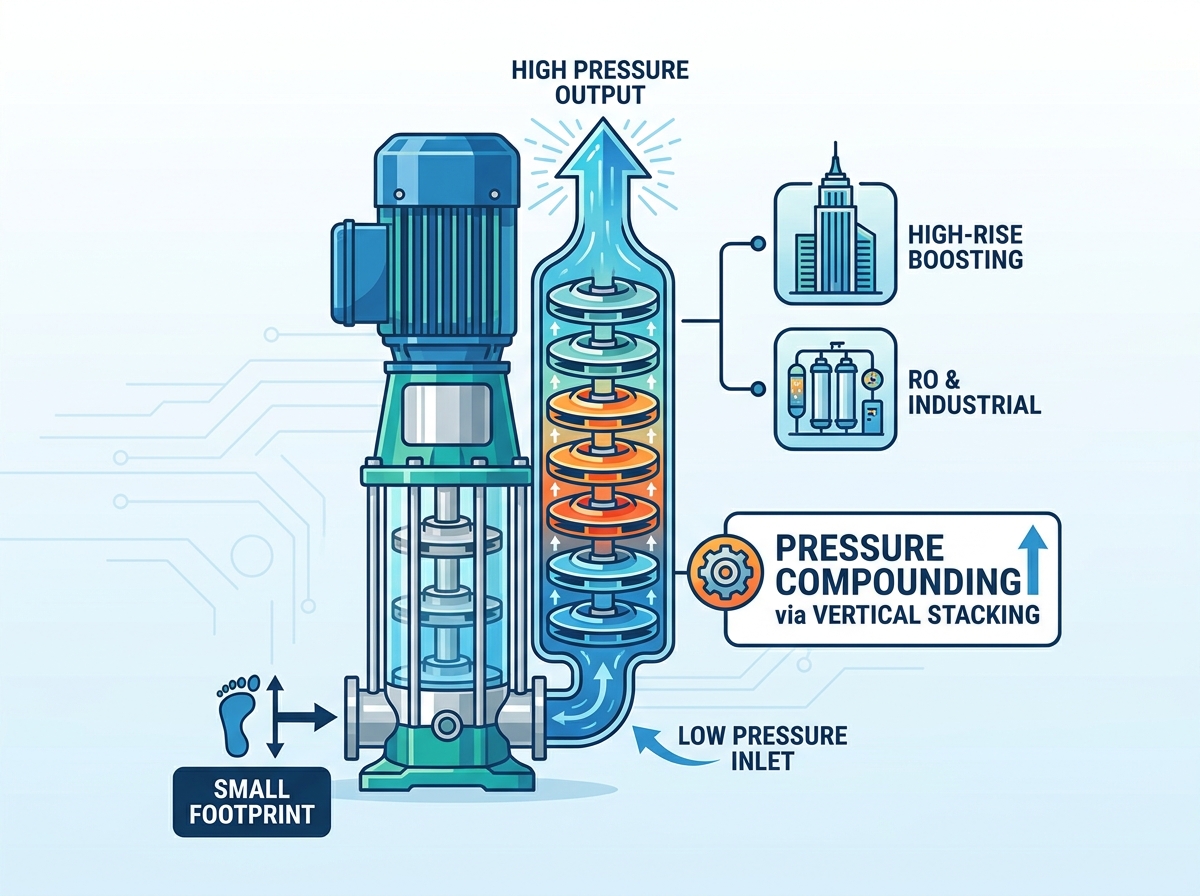
Hotels, large hospitals, and residential high-rises demand consistent water delivery daily. A commercial building water supply system must perform flawlessly under pressure. It must maintain constant pressure at the very top floor. Imagine taking a shower on the 40th floor of a hotel. The water pressure must feel robust, steady, and comfortable. The primary success metric here focuses entirely on flow consistency. You need stable pressure regardless of fluctuating simultaneous usage below. Hundreds of guests might open taps simultaneously every morning. The pump system must react instantly to this massive demand drop. Additionally, minimal acoustic vibration is an absolutely non-negotiable requirement. Guests and patients will complain loudly about noisy mechanical equipment. Smooth operation ensures a peaceful environment for everyone inside the building.
Industrial RO systems push water aggressively through dense semi-permeable membranes. This precise process demands sustained, high-pressure force continuously. Vertical pumps provide this necessary brute force reliably over time. The key success metric focuses heavily on steady flow rates. Pressure fluctuations can quickly cause severe membrane fouling issues. Damaged membranes cost thousands of dollars to replace prematurely. Absolute material compatibility is also crucially important for these environments. It prevents rapid system degradation from aggressive chemical interactions. You cannot risk contaminating the purified water stream with rust. Clean water applications require absolute certainty in equipment selection.
Industrial manufacturing facilities constantly inject water into pressurized boiler systems. This hazardous thermal environment demands extreme mechanical reliability. The fluid often reaches incredibly high temperatures during normal operation. A successful pump deployment requires robust high-temperature tolerance capabilities. Standard mechanical seals will melt or warp under these extreme conditions. You also need highly reliable continuous-duty operational cycles. The pump must run continuously without any catastrophic failure. Boiler starvation can lead to dangerous steam explosions quickly. Dependability becomes a strict matter of facility safety here.
Construction materials directly dictate the operational longevity of your pump. Subpar metals will inevitably corrode under harsh industrial conditions. Let us examine the transition from cast iron to stainless steel. Historically, engineers used standard cast iron bases to save money. Unfortunately, cast iron rusts easily when exposed to aggressive water chemistries. Modern applications demand full stainless steel construction instead. Stainless steel prevents destructive oxidation and dangerous particulate shedding entirely.
We must highlight the TDLF high pressure booster pump specifically here. It stands out prominently as a premium industry standard. It handles corrosive and sanitary environments flawlessly every single day. Its wetted parts utilize premium 304 or 316 stainless steel. This premium construction ensures complete compliance against strict potable water standards. Industrial safety protocols frequently demand this high level of purity. It resists pitting corrosion from minor chloride exposure effectively. You gain incredible peace of mind using this robust platform.
Mechanical seal selection is another intensely critical specification step. Fluid temperature and abrasive particulate presence dictate your ultimate choice. Tungsten carbide seals offer truly exceptional durability in tough conditions. They resist mechanical abrasion heavily compared to standard carbon seals. Silicon carbide provides another excellent alternative for high-temperature applications. Always match the mechanical seal material precisely to your pumped fluid. Choosing the wrong seal guarantees a massive, messy fluid leak.
Premature equipment failure rarely stems from inherent manufacturing defects. Careless installation errors usually cause the most severe mechanical damage. Let us look closely at Net Positive Suction Head (NPSH). Failing to calculate NPSHa correctly remains the most common engineering failure. If available NPSH drops too low, destructive cavitation occurs rapidly. Cavitation forms tiny vapor bubbles inside the liquid stream. These bubbles implode violently against the spinning metal impellers. This process literally destroys expensive impellers from the inside out. You must perform these hydraulic calculations carefully before installation begins.
Pipe strain and shaft misalignment also pose massive operational risks. Never use the actual pump casing to support heavy pipe weight. This terrible practice warps the metal housing surprisingly quickly. It destroys internal bearings and shatters brittle mechanical seals. Hydraulic Institute standards strongly recommend installing robust vibration isolators on every setup. Flexible rubber expansion joints are equally necessary for long-term health. They absorb dangerous mechanical stress effectively during thermal expansion phases.
Finally, you must carefully consider the acute danger of dry running. Mechanical seals remain highly vulnerable to dry pumping conditions. Friction generates intense, localized heat within mere seconds of fluid loss. The ceramic seal faces will shatter if protective fluid stops flowing. You must strictly install reliable low-water protection switches. Electronic pressure sensors provide excellent insurance against dry-run catastrophes. They shut the motor down before expensive damage occurs.
Bolting the pump rigidly to the floor before aligning the pipework.
Using a suction pipe diameter smaller than the pump inlet port.
Failing to vent trapped air from the casing before initial startup.
Corporate B2B buyers need logical, repeatable frameworks for vendor evaluation. We compiled these important evaluation parameters into structured formats below. First, you must understand complex hydraulic performance curves thoroughly. How do you read a pump curve effectively for your project? You want your operational duty point to fall perfectly inside. It must sit within the Best Efficiency Point (BEP) zone. Operating constantly outside the BEP wastes valuable electrical power. It also drastically increases harmful mechanical wear on the bearings.
Regulatory compliance and safety certifications represent strictly non-negotiable buyer requirements. Look specifically for official CE marks on the equipment nameplate. Demand strict adherence to ISO 9001 global manufacturing standards. WRAS or NSF certifications are legally required for drinking water projects. You cannot skip these legal requirements under any circumstances.
Here is a concise, actionable procurement checklist for commercial buyers:
Verify the immediate local availability of critical replacement parts.
Check stock levels for common wear items like mechanical seals.
Confirm exact manufacturing lead times for proper project staging.
Check the specific Minimum Order Quantity (MOQ) policies beforehand.
Review the comprehensive manufacturer warranty terms and legal conditions.
Test the technical support responsiveness before placing your final order.
Evaluation Criteria | Minimum Acceptable Requirement | Ideal Industry Standard |
|---|---|---|
Hydraulic Performance | Meets absolute peak flow demands safely | Operates consistently at the BEP zone |
Safety Certifications | ISO 9001 manufacturing, CE mark | WRAS/NSF approvals (if potable water) |
Material Specifications | Cast Iron base construction materials | Full 304/316 Stainless Steel wetted parts |
Post-Sales Support | Standard basic one-year limited warranty | Extended warranty terms, local parts stock |
Specify your highly complex pumping equipment carefully and methodically. This selection process remains a delicate, critical engineering balancing act. You must align intense pressure requirements perfectly against strict spatial constraints. Material chemical compatibility also demands your utmost professional attention. Neglecting these details will inevitably result in poor system performance.
Project decision-makers should take clear, immediate action steps today. First, audit your current facility flow and head requirements thoroughly. Next, calculate your precise NPSH available onsite using professional hydraulic tools. Finally, consult directly with a certified pump engineer or technical manufacturer. They can expertly verify your equipment sizing before you finalize procurement. Proper upfront planning prevents disastrous operational failures down the road.
A: Naming conventions vary slightly across different pump manufacturers globally. Generally, both acronyms denote high-quality stainless steel construction. However, specific flange types, connection methods, or motor efficiency ratings might differ. You should always review the exact technical specifications and material data sheets to confirm exact compatibility for your project.
A: No. These pumps feature extremely tight internal clearances between their impellers and diffusers. This design makes them suitable only for clean, non-abrasive fluids. Pumping dirty water or heavy slurries will quickly cause catastrophic jamming, severe internal abrasion, and complete mechanical failure.
A: Excessive vibration usually indicates a serious underlying engineering issue. Root causes frequently include shaft misalignment, cavitation due to a starved suction line, or badly worn motor bearings. You must shut the pump off immediately. Perform a thorough mechanical inspection to prevent permanent structural damage.


