 English
 简体中文
简体中文
Views: 0 Author: Site Editor Publish Time: 2026-07-08 Origin: Site


Modern wastewater management faces a growing crisis hidden below ground. Facilities constantly battle an influx of fibrous materials, flushable wipes, and harsh agricultural runoff. These aggressive solids render traditional pumping solutions inadequate for many modern lift stations.
Facility managers and engineers constantly struggle to keep fluids moving efficiently. They must balance the upfront capital expenditure of specialized pumping equipment against the recurring operational costs of manual de-ragging and unexpected downtime. Unplanned maintenance rapidly drains budgets while posing significant environmental and compliance risks.
We will explore how modern cutting technologies solve these persistent clogging issues. This guide provides an objective, engineering-focused framework to evaluate specific high-solid wastewater applications. You will learn exactly when a chopper-style design becomes the right technical and financial fit for your facility.
Heavy-duty chopper designs prevent "ragging" and clogging by macerating fibrous solids before they enter the pump volute, drastically reducing maintenance downtime.
Not all solid-handling pumps are equal; chopper impeller pumps serve distinct high-flow applications compared to grinder pumps or standard non-clog designs.
Selecting the right industrial sewage pump requires matching cutting mechanics and construction materials (e.g., hardened alloys, stainless steel) to the specific abrasives and chemicals in your fluid stream.
Partnering with an experienced OEM submersible pump manufacturer ensures accurate hydraulic sizing and proper integration with existing guide rail systems.
Municipal and industrial wastewater profiles look drastically different today than they did two decades ago. Modern consumer habits and industrial processes introduce a heavy load of synthetics and fibers into the waste stream. Standard non-clog impellers rely entirely on passing whole solids through large volute passages. When confronted with modern fibrous waste or agricultural debris, they experience a phenomenon known as ragging.
Ragging occurs when long, stringy materials wrap around the impeller blades. As these materials build up, they restrict fluid movement. This inevitably leads to diminished flow rates, drastically increased electrical amp draw, and eventual motor failure. Upgrading to a heavy duty submersible pump equipped with a cutting mechanism actively slices these materials, preventing the initial accumulation.
Facilities often underestimate the compounding financial impact of recurrent pump blockages. The expenses extend far beyond simple repair bills. To accurately assess the need for an upgrade, you must calculate several hidden operational burdens.
Labor and Safety Costs: Every manual pump clearing requires confined-space entry. This mandates specialized safety gear, multiple personnel, and hours of intensive labor in hazardous environments.
Accelerated Mechanical Wear: When an impeller becomes unbalanced due to unevenly distributed rags, it causes severe shaft deflection. This deflection accelerates wear on mechanical seals and bearings, leading to premature catastrophic failures.
Compliance and Penalty Risks: A clogged lift station often results in sanitary sewer overflows (SSOs). Environmental agencies heavily penalize facilities for these hazardous spills, and the associated cleanup efforts require massive unbudgeted expenditures.
A successful equipment upgrade must meet distinct performance metrics. First, you need a verifiable reduction in maintenance interventions. If operators previously cleared a lift station weekly, the new system should operate uninterrupted for months. Second, the system must maintain the required Total Dynamic Head (TDH) while processing heavy solids. Finally, you must ensure long-term motor reliability under continuous, rigorous operation without experiencing thermal overload.
Engineers often confuse the terminology surrounding solid-handling pumps. Selecting the wrong cutting mechanism leads to poor hydraulic performance and rapid equipment failure. Understanding the mechanical differences helps you deploy the correct technology for your specific application.
Engineers traditionally specify standard non-clog designs for general wastewater applications. They feature smooth, rounded impeller vanes designed to let spherical solids pass intact. Unfortunately, they lack any mechanism to break down long, stringy materials. While highly efficient for moving clean water or waste containing only organic spherical solids, they fail rapidly when fibrous materials bind the impeller.
Grinder pumps utilize a rotating star-shaped cutter ring positioned at the suction inlet. This ring grinds solids against a stationary shredding plate, emulsifying waste into a fine slurry. They excel in residential pressure sewer systems where small diameter pipes require a liquid consistency. However, grinder pumps typically produce low flow rates at very high heads. They cannot move the massive volumes of water required in primary municipal lift stations.
A chopper impeller pump bridges the gap between high-volume fluid transfer and aggressive solid reduction. It features sharpened leading edges on the impeller itself. As the impeller spins, these edges shear directly against a stationary cutter bar positioned at the suction plate. They slice solids precisely as they enter the volute.
They are specifically engineered for high-flow, heavy-duty municipal and industrial lift stations. Chopper designs thrive where fibrous solids remain prevalent, but high-volume fluid movement remains non-negotiable.
Pump Type | Primary Mechanism | Solid Handling Approach | Best Application Fit |
|---|---|---|---|
Standard Non-Clog | Smooth, wide volute passages | Passes spherical solids intact | Low-fiber municipal sewage, stormwater |
Grinder Pump | Rotating star-cutter and shredding ring | Emulsifies solids into a fine slurry | Low-flow, high-head residential pressure sewers |
Chopper Pump | Sharpened impeller shearing against a cutter bar | Slices fibrous materials upon entry | High-flow industrial/municipal lift stations |
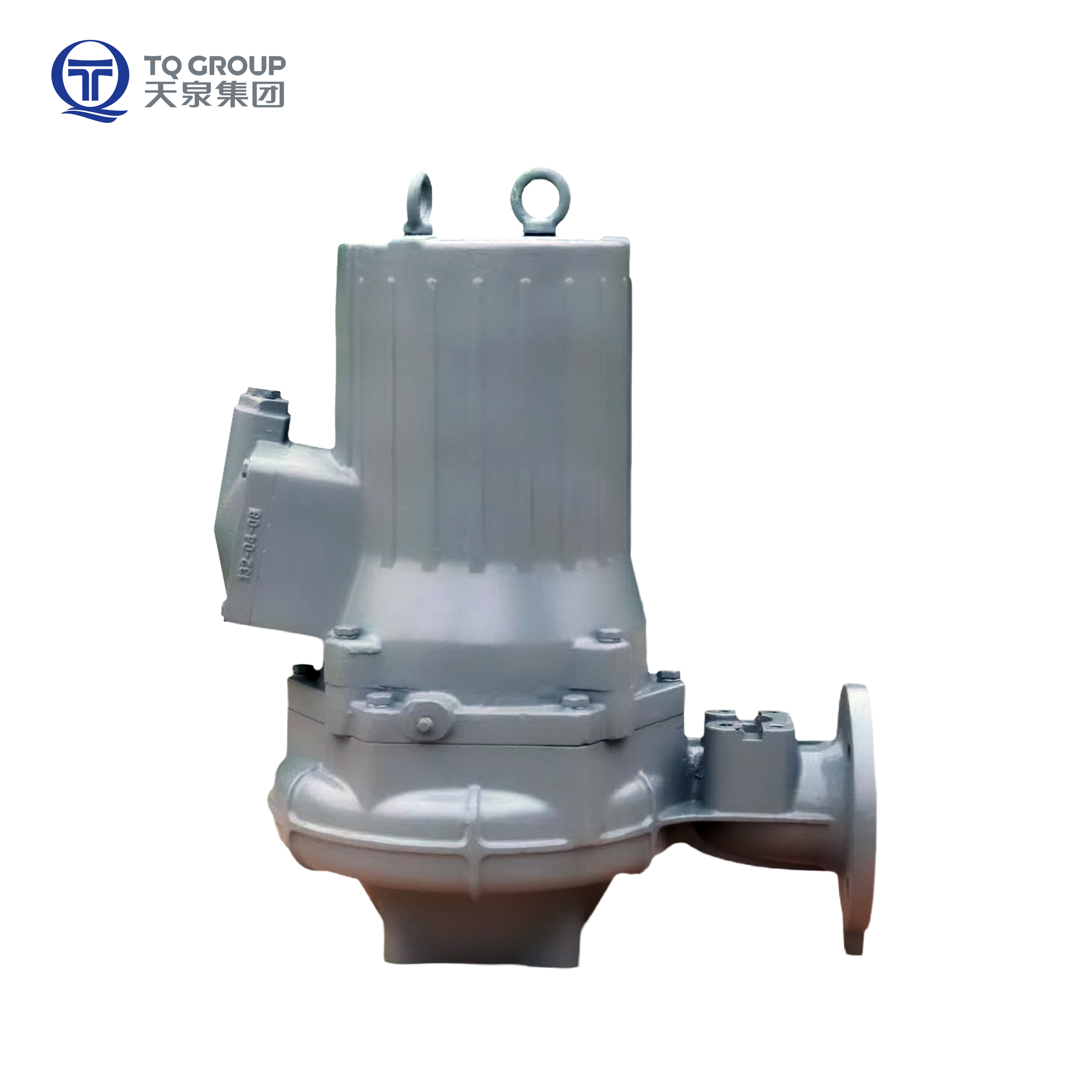
Procuring a durable industrial sewage pump requires rigorous scrutiny of its internal components. A pump might feature a chopper design, but poor material selection will render it useless within months. You must evaluate metallurgy, hydraulic trade-offs, and motor protection systems.
Standard cast iron remains woefully insufficient for cutting components. Wastewater acts as an abrasive slurry. When standard iron edges encounter grit mixed with tough fibers, they dull rapidly, losing their cutting ability. You should evaluate pumps utilizing hardened alloy steel for the impeller and cutter bar. Look for materials rated at Rockwell C60 or higher. This extreme hardness ensures the blades retain their sharp edges through millions of shearing cycles.
Furthermore, you must assess the chemical composition of your fluid stream. If the wastewater contains corrosive industrial chemicals or exists in a high-salinity environment, hardened steel might corrode. In these aggressive chemical environments, specify full stainless steel construction. While stainless steel represents a higher initial investment, it prevents catastrophic structural degradation.
Engineers must address an inherent mechanical trade-off. Chopper mechanisms typically incur a slight penalty to hydraulic efficiency compared to smooth non-clog impellers. The shearing action and tighter clearances create internal fluid friction. You will likely see a 5% to 10% drop in peak efficiency on the pump curve.
However, you must calculate the broader operational reality. A non-clog pump operating at 75% efficiency drops to 30% efficiency the moment rags partially obstruct its volute. A chopper pump running steadily at 65% efficiency outperforms a partially clogged system. The consistent, clog-free operation easily offsets the marginally lower baseline efficiency.
Chopping thick rags generates intense, instantaneous spikes in torque. The motor and shaft must withstand these mechanical shocks without faltering. The cutting action creates brief moments of high mechanical stress, meaning the motor must be sized with an adequate service factor—often 1.15 or higher—to prevent overheating during heavy processing.
Protecting the internal electronics remains critical. Always look for dual mechanical seals operating in an isolated oil bath. This redundant design ensures that if the primary outer seal fails, the inner seal protects the stator. Additionally, integrate moisture detection probes and thermal overload sensors directly into the motor windings. These sensors automatically shut down the equipment if temperatures spike, saving the motor from permanent failure.
Installing a modern submersible sewage pump is rarely a simple drop-in replacement. Lift stations possess aging infrastructure, unique electrical panels, and specific environmental challenges. Careful planning prevents costly installation delays.
Facilities rely on guide rail systems to easily raise and lower pumps for maintenance. Before purchasing new equipment, assess whether the new unit can adapt to your existing lift station infrastructure. Many modern manufacturers offer adaptable flange kits that mate perfectly with older base elbows. If compatibility kits do not exist, you must factor in the labor and downtime required for a complete base elbow replacement.
Many modern facilities utilize VFDs to match pumping rates with varying inflow volumes. However, chopper pumps rely on momentum and rotational speed to effectively shear solids. Operating them at excessively low speeds via a VFD severely compromises the cutting action.
If the impeller spins too slowly, tough fabrics can wrap around the blades rather than being sliced. As a best practice, program your VFDs to maintain a minimum operational frequency (typically around 35-40 Hz) when running a chopper mechanism. You must configure the control panel to deliver a rapid ramp-up time, ensuring maximum torque during start-up when resting solids enter the volute.
You must acknowledge the mechanical limitations of slicing technologies. Chopper pumps are meticulously designed for organic and fibrous solids. They easily handle wipes, rags, wood chips, and agricultural waste. They are not rock crushers.
Environments with high concentrations of sand, gravel, or metal shavings will rapidly dull the cutting edges. If your lift station receives heavy stormwater grit, the hardened cutter bars will require much more frequent maintenance. In highly abrasive applications, implement upstream grit removal screens to protect the cutting mechanisms and extend the maintenance interval.
How you source your equipment dictates the level of engineering support you receive during and after installation. The choice between local distributors and direct manufacturer partnerships depends entirely on the complexity of your fluid dynamics.
Procuring through standard distribution channels suits simple, standard replacements. If your facility processes highly predictable fluid dynamics with well-documented solid profiles, off-the-shelf units work perfectly. Local distributors often carry standard models in stock, providing rapid replacement turnaround for emergency failures in light-duty municipal settings.
For complex industrial applications, partnering with an OEM submersible pump manufacturer provides distinct engineering advantages. Facilities processing food waste, pulp, paper, or thick agricultural sludge require tailored hydraulic solutions.
Custom Impeller Trimming: OEMs can meticulously machine the impeller diameter to match your exact duty points for flow and head. This prevents the pump from running off its curve and drawing excessive amperage.
Factory Acceptance Testing (FAT): Direct partnerships grant access to rigorous testing protocols. You receive verifiable performance curves demonstrating flow, head, and vibration data recorded before the unit ever leaves the factory floor.
Direct Engineering Support: OEM engineers analyze your specific industrial wastewater profiles. They recommend precise metallurgies and motor specifications that a standard distributor might overlook.
Your relationship with the vendor extends long beyond the initial installation. Evaluate vendor transparency regarding lead times for consumable wear parts. Replacement cutter bars, mechanical seals, and specialized bearings must remain readily available. A pump that functions flawlessly becomes a liability if replacement parts take six months to ship. Prioritize partners who guarantee domestic stock for critical wear components.
Transitioning to a heavy-duty chopper design represents a highly strategic investment. It actively eliminates the systemic costs associated with pump clogging in unpredictable, fibrous wastewater applications. By prioritizing material hardness, proper hydraulic sizing, and robust motor protection, facilities can regain control over their maintenance schedules.
To ensure a successful implementation, consider the following next-step actions:
Conduct a rigorous system audit to document the specific types of solids causing your current failures.
Recalculate your system head requirements, as pipe friction and internal scaling may have changed since the original station design.
Request custom performance curves from shortlisted manufacturers to verify the chopper design meets your operational parameters without overloading the electrical system.
Review your control panel and VFD programming to guarantee adequate start-up torque and minimum operating speeds.
A: Yes, marginally. The cutting mechanism creates slight hydraulic resistance, often resulting in lower efficiency compared to a standard non-clog pump. However, this is typically offset by the elimination of flow-drops caused by partial clogs. Proper motor sizing is required.
A: No. Chopper pumps are engineered to shear fibrous materials, plastics, and organic matter. High concentrations of inorganic abrasives like sand, rocks, or metal will quickly dull the cutting edges and damage the pump.
A: It depends heavily on the grit content of the wastewater. In standard municipal sewage, cutter bars can last several years. In highly abrasive industrial applications, annual inspections are recommended.
A: It may be. Chopper pumps can draw higher startup or operational current when shearing tough solids. Ensure your breakers, contactors, and VFDs (if used) are rated for the heavy-duty motor specifications.


